
Recovery plans for pain that starts at the desk
Describe your back, neck, shoulder, or wrist discomfort and get a practical plan with safety checks, simple exercises, and daily progress tracking.
PhysiotherAIpy is an informational recovery support tool. It is not a diagnosis, emergency service, or replacement for a licensed clinician.
Safety-first screening
The flow looks for red flags such as trauma, numbness, severe weakness, or symptoms that need professional care.
Desk-sized routines
Plans focus on short mobility and strengthening sessions that fit around meetings and long work blocks.
Track what changes
Log pain, notes, and completed exercises so the app becomes a recovery record instead of a one-off answer.
The focus
Long sitting creates a predictable pattern of aches
Desk pain usually needs better movement habits, progressive strength work, and clear boundaries for when to stop and get checked. That is a narrower and more useful problem than trying to cover every injury.

5 min
Check-in
3-5
Exercises
Daily
Tracking
Desk exercise library
Short routines for common desk-work problems
Start with a general work-break routine or choose the guide that matches where you feel discomfort.
Desk Exercises: 8 Best Exercises for Desk Workers
Eight practical desk exercises for neck, shoulders, back, hips and wrists, with a five-minute work-break routine.

Wrist Pain From Mouse Use: Causes, Fixes and Exercises
Practical steps for wrist pain from mouse use, including neutral wrist setup, activity changes and gentle hand and forearm exercises.

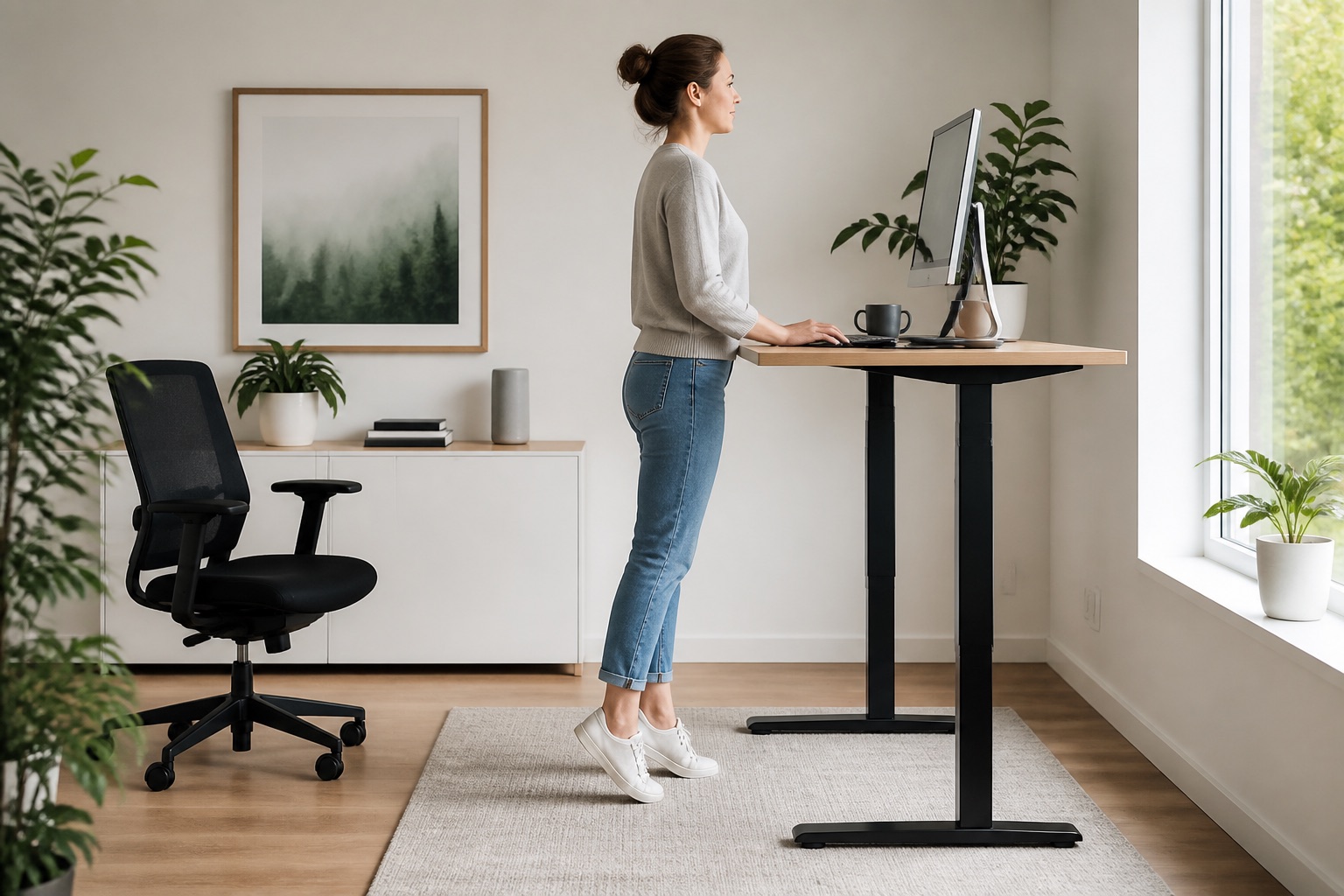
Standing Desk Exercises: A 5-Minute Work Break
A simple five-minute standing desk workout with six low-intensity exercises for hips, calves, shoulders and upper back.
Exercises for Rounded Shoulders: 6-Move Desk Routine
Six exercises for rounded shoulders that build upper-back movement and shoulder control without promising a permanent posture correction.
How it works
A practical loop for office-related pain
01
Describe the pattern
Tell the app where it hurts, how long it has been going on, and what desk tasks aggravate it.
02
Screen for red flags
The assessment separates low-risk desk discomfort from symptoms that should be checked by a clinician.
03
Get a routine
Receive a short plan with mobility, strength, posture breaks, and movements to avoid.
04
Log recovery
Use the dashboard to record pain, notes, and completed exercises across the week.
Guides
Start with common desk pain patterns
Use these guides to understand symptoms before generating a personal plan.
Office Chair Back Pain: How to Relieve Pain From Sitting
Office chair back pain explained with practical setup changes, movement breaks and exercises for lower back pain from sitting.
Text Neck: How Your Phone Is Causing Pain (and How to Fix It)
Tech neck overview with posture tweaks, micro-breaks, and strengthening to protect your neck.
Carpal Tunnel Syndrome: Early Signs and Treatment Options
Early carpal tunnel signs, wrist-friendly habits, and exercises before considering further care.
Poor Posture Pain: 5 Mistakes and How to Correct Them
Five posture mistakes that drive pain and simple corrections to feel better at work and home.
Turn sitting-related pain into a trackable recovery plan
Best for mild to moderate discomfort linked to desk work. Seek urgent care for trauma, severe symptoms, spreading numbness, weakness, or bladder/bowel changes.