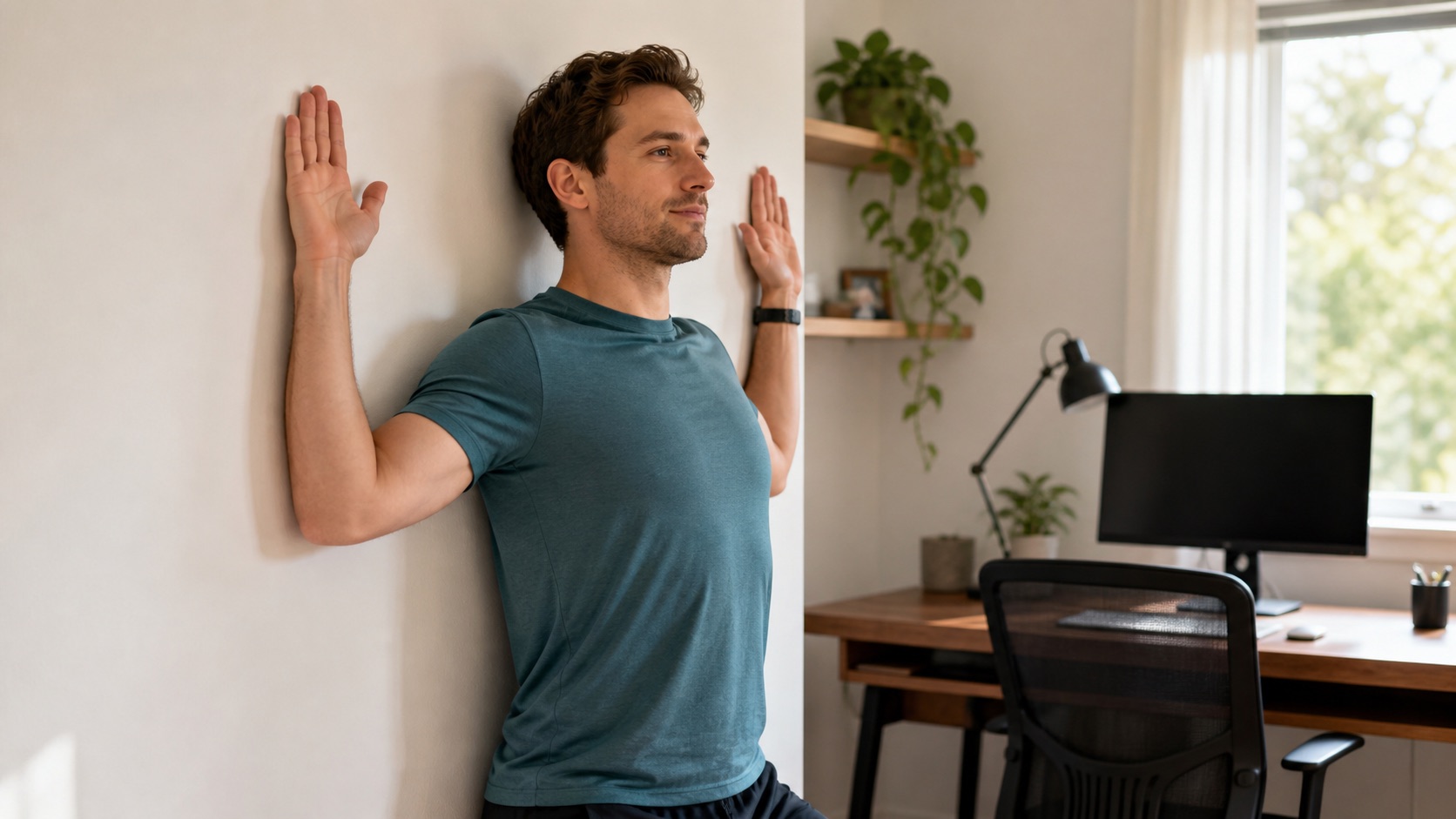
Standing Desk Exercises: A 5-Minute Work Break
A simple five-minute standing desk workout with six low-intensity exercises for hips, calves, shoulders and upper back.
A standing desk changes position but does not remove the need to move. Use this short routine as a work break and alternate between sitting, standing and other tasks across the day.
Updated 30 August 2026
Common symptoms
- Leg or lower-back fatigue while standing
- Tight hips or calves
- Shoulder tension during screen work
Likely causes
- Standing still for long periods
- Desk or monitor set at an uncomfortable height
- Too little variation between tasks and positions
Exercises
Calf Raise
12-15 repetitions
Steps
- Stand with fingertips on the desk.
- Rise onto the balls of your feet.
- Lower slowly without leaning forward.
Why this helps: Adds lower-leg movement during a standing work block.
Supported March
20 alternating steps
Steps
- Stand tall and hold the desk lightly.
- Lift one foot, then the other.
- Keep the movement slow and controlled.
Why this helps: Shifts weight and breaks up static standing.
Desk Hip Hinge
8-10 repetitions
Steps
- Place hands lightly on the desk.
- Push your hips back while keeping your spine comfortable.
- Stand by pressing through your feet.
Why this helps: Moves the hips and loads the back of the legs gently.
Standing Hip Flexor Stretch
20 seconds per side
Steps
- Take a small split stance.
- Tuck the pelvis gently and shift forward.
- Keep both feet pointing ahead.
Why this helps: Changes hip position between sitting and standing blocks.
Desk Chest Opener
5 slow breaths
Steps
- Place both hands on the desk and step back.
- Let your chest lower gently between the arms.
- Keep the neck relaxed.
Why this helps: Adds shoulder and upper-back movement after keyboard work.
Standing Trunk Turn
5 repetitions per side
Steps
- Cross your arms loosely over your chest.
- Turn the upper body comfortably to one side.
- Return to centre and change sides.
Why this helps: Restores gentle rotation after facing a screen.
Safety first
- Wear stable footwear and keep the floor clear.
- Use support if balance is uncertain and stop if you feel dizzy or unsteady.
FAQs
How long should I stand at a standing desk?
There is no universal ideal. Increase standing gradually and change position before discomfort builds rather than forcing a fixed sitting-to-standing ratio.
Are standing desks better for back pain?
They offer another position, but standing still can also become uncomfortable. The useful feature is the ability to vary position and keep moving.
How often can I do this routine?
Use it once or twice during the workday, or select two movements during shorter breaks. Reduce the amount if symptoms increase afterwards.
Sources and further reading
Get your personalised AI-generated recovery plan
Start an assessment to receive exercises tailored to you.