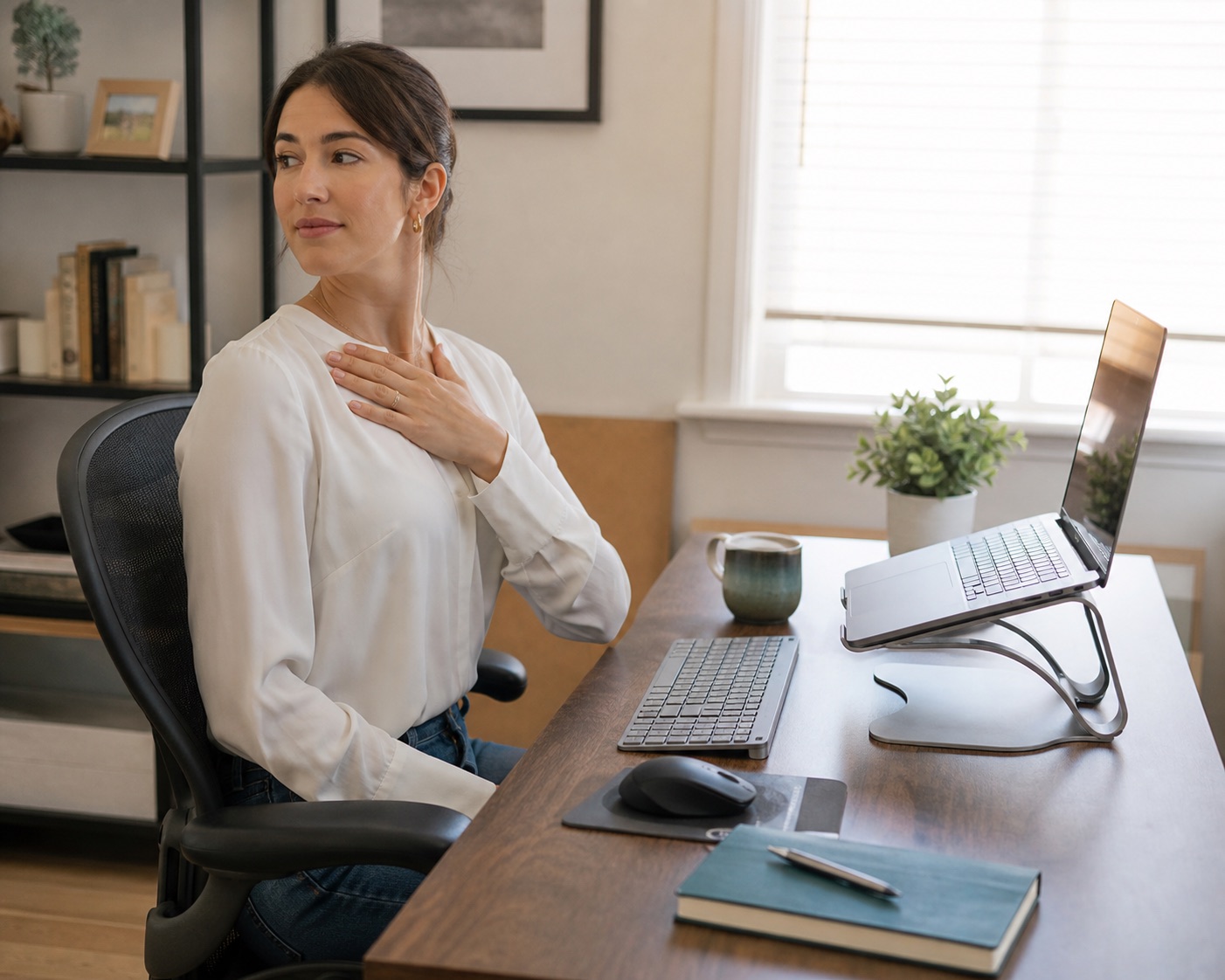
Desk Exercises: 8 Best Exercises for Desk Workers
Eight practical desk exercises for neck, shoulders, back, hips and wrists, with a five-minute work-break routine.
Use this five-minute desk routine to change position and move the areas that often feel stiff during screen work. Short, frequent breaks are generally more useful than waiting until the end of the day.
Updated 30 August 2026
Common symptoms
- General stiffness after screen work
- Neck and shoulder tension
- Aching back, hips or wrists after sitting
Likely causes
- Long periods without changing position
- Repeated keyboard and mouse work
- A workstation that does not fit the user
Exercises
Seated Chin Retraction
5-8 slow repetitions
Steps
- Sit comfortably and look ahead.
- Glide your head gently backwards without tipping it.
- Relax fully between repetitions.
Why this helps: Moves the neck out of a prolonged screen position without forcing a stretch.
Shoulder Blade Squeeze
8-10 repetitions
Steps
- Let your shoulders relax.
- Draw the shoulder blades gently back and down.
- Hold for 2-3 seconds, then release.
Why this helps: Adds upper-back movement after sustained keyboard work.
Seated Upper-Body Twist
5 repetitions per side
Steps
- Sit with both feet flat.
- Cross your arms and turn your upper body comfortably to one side.
- Return to centre and repeat on the other side.
Why this helps: Restores comfortable rotation through the upper back.
Seated Chest Stretch
5 holds of 5-10 seconds
Steps
- Sit away from the chair back.
- Draw your shoulders back and extend your arms slightly out.
- Lift your chest gently without forcing your lower back.
Why this helps: Changes the position used for typing and opens the front of the shoulders.
Wrist and Finger Reset
8 hand opens and 5 circles each way
Steps
- Rest your forearms and open both hands wide.
- Make a gentle fist, then straighten the fingers.
- Circle each wrist slowly within a comfortable range.
Why this helps: Breaks up repeated gripping and mouse movements.
Sit to Stand
8-12 repetitions
Steps
- Move to the front of a stable chair.
- Stand using your legs, then lower with control.
- Use the desk for light support if needed.
Why this helps: Loads the hips and legs while interrupting sitting time.
Standing Hip Flexor Stretch
20 seconds per side
Steps
- Take a small split stance and hold the desk lightly.
- Tuck your pelvis gently and shift forward.
- Keep the movement small and comfortable.
Why this helps: Changes hip position after a long period of sitting.
Calf Raises
10-15 repetitions
Steps
- Stand tall with fingertips on the desk.
- Rise onto the balls of your feet.
- Lower slowly and keep your weight even.
Why this helps: Adds lower-leg movement and a brief standing break.
Safety first
- Use a stable chair and clear space before standing.
- Stop if an exercise causes sharp pain, dizziness, spreading numbness or weakness.
FAQs
How often should desk workers exercise?
There is no single schedule for everyone. A useful starting point is a short movement or task change every hour, then adjust it around your symptoms and workload.
Do desk exercises replace a workstation assessment?
No. Exercises can add movement, but persistent discomfort may also require changes to screen, chair, keyboard or mouse position.
Can I do the routine in five minutes?
Yes. Choose four or five movements that match where you feel stiff, or complete the full routine when you have longer.
Sources and further reading
Get your personalised AI-generated recovery plan
Start an assessment to receive exercises tailored to you.