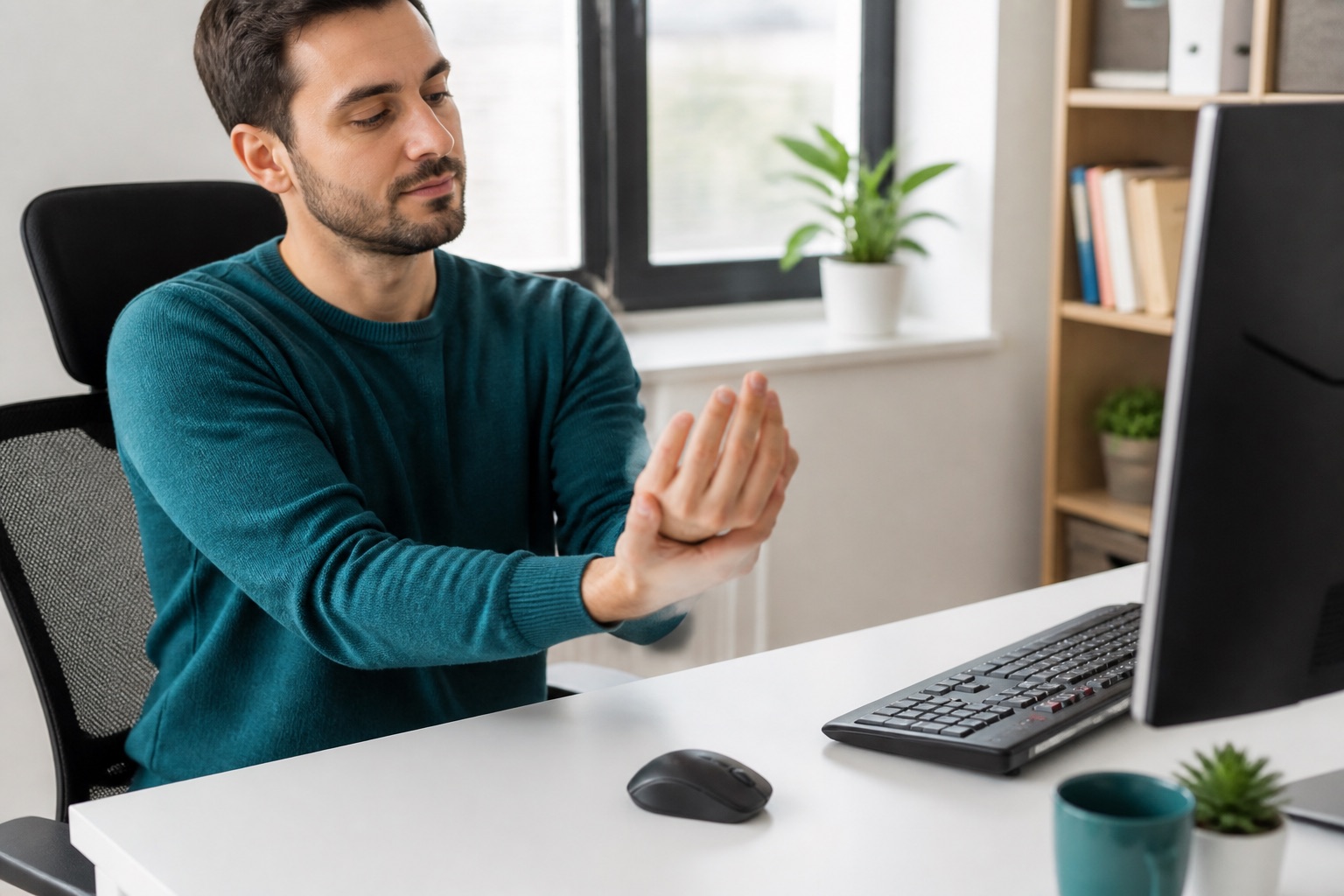
Wrist Pain From Mouse Use: Causes, Fixes and Exercises
Practical steps for wrist pain from mouse use, including neutral wrist setup, activity changes and gentle hand and forearm exercises.
Wrist pain while using a mouse can build gradually from repeated movement, sustained gripping or an awkward workstation. Reduce the aggravating load, keep the wrist near a comfortable neutral position and build activity back gradually.
Updated 30 August 2026
Common symptoms
- Aching or burning around the wrist or forearm
- Stiffness or weakness during mouse use
- Tingling, numbness or swelling
Likely causes
- Repeated mouse or keyboard movements
- Holding the wrist bent or reaching for the mouse
- A sudden increase in computer work or gripping
Exercises
Finger Opens
2 sets of 10
Steps
- Rest your forearm on the desk.
- Open the hand and spread the fingers comfortably.
- Relax without clenching a hard fist.
Why this helps: Adds gentle movement without more gripping load.
Wrist Flexor Stretch
2 holds of 15-20 seconds per side
Steps
- Straighten one arm with palm up.
- Use the other hand to guide the fingers down gently.
- Stop before pain or tingling.
Why this helps: Provides a light stretch through the palm-side forearm muscles.
Wrist Extensor Stretch
2 holds of 15-20 seconds per side
Steps
- Straighten one arm with palm down.
- Gently bend the wrist so the fingers point down.
- Keep the elbow relaxed and do not force it.
Why this helps: Changes position after repeated mouse and keyboard work.
Isometric Wrist Extension
5 holds of 5 seconds
Steps
- Rest your forearm with the wrist neutral.
- Place the other hand over the back of the sore hand.
- Push up very gently without allowing movement.
Why this helps: Introduces light muscle loading without repeated wrist motion.
Mouse-Reach Reset
Check at the start of each work block
Steps
- Bring the mouse close and in line with your elbow.
- Relax your shoulder and support the forearm lightly.
- Move from the arm as well as the wrist.
Why this helps: Reduces reaching and sustained awkward wrist positions.
Safety first
- Stop exercises that increase tingling or numbness.
- Seek medical advice if weakness, swelling or symptoms are worsening or not settling.
FAQs
Can using a mouse cause wrist pain?
Repeated mouse use can contribute to wrist or forearm symptoms, although pain often has more than one cause. Workload, grip, workstation position and recovery time all matter.
Does an ergonomic mouse help wrist pain?
It may help if it lets you work with less reaching and a more comfortable wrist position, but no single mouse suits everyone. Trial changes and assess how symptoms respond.
Should I stop using the computer completely?
Usually not. Reduce or modify the aggravating activity for a short period, use task changes and gradually return rather than resting the area for a long time.
Sources and further reading
Get your personalised AI-generated recovery plan
Start an assessment to receive exercises tailored to you.