Injury Guide · Hip
Why Your Hips Tilt Forward (Anterior Pelvic Tilt Explained)
Anterior pelvic tilt basics with mobility and strength cues to balance your hips and spine.
What is it?
General background on why your hips tilt forward (anterior pelvic tilt explained). The examples below are shared across this body area and have not been individually reviewed for this condition. Ask a qualified physiotherapist or GP about suitable care.
Common symptoms
- Front or side hip ache with walking or stairs
- Tightness after sitting or running
- Occasional clicking without instability
Common causes
- Load spikes in running or gym work
- Weakness in hip stabilisers
- Limited hip or thoracic mobility
Example movements
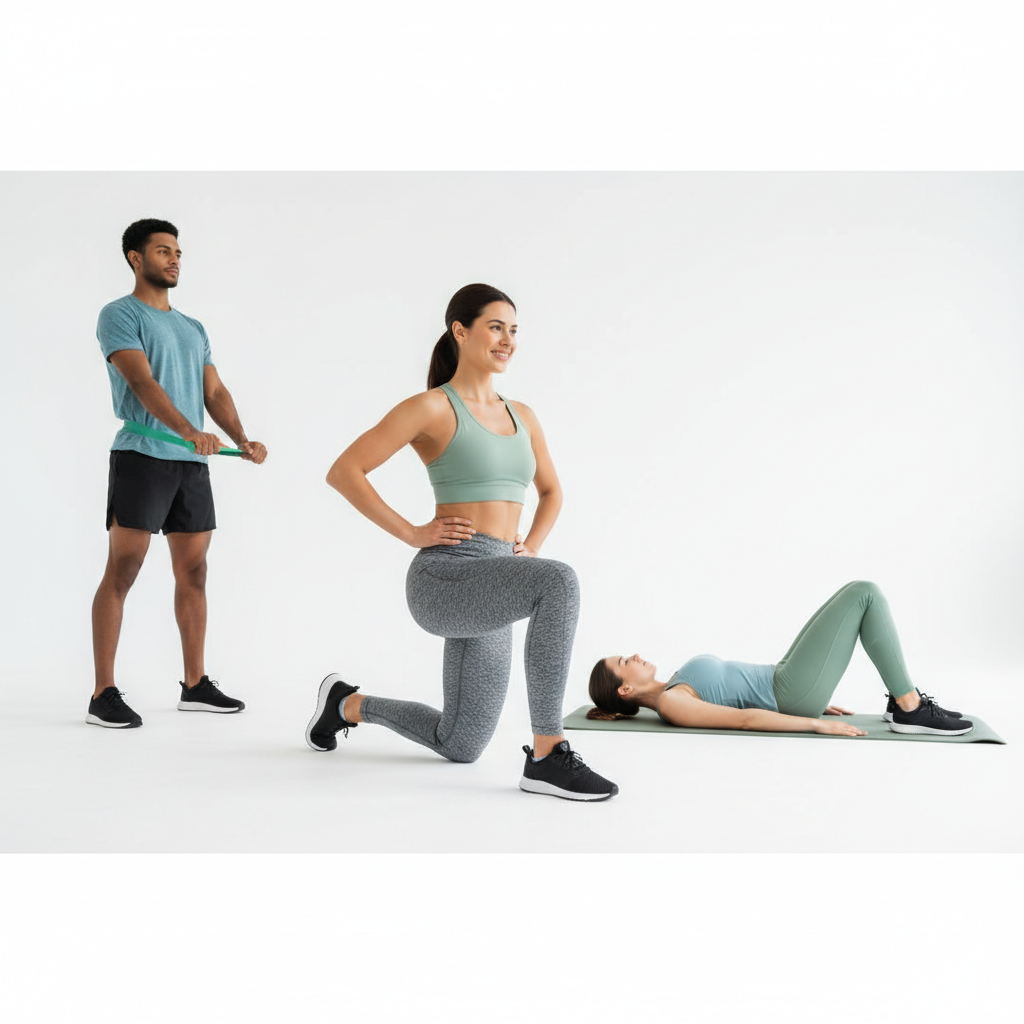
Hip Flexor Stretch (Half-Kneel)
Opens the front of the hip with control.
Example routine: 30s/side x 2, daily
Cues: Tuck the pelvis gently; keep ribs stacked.
Side Plank with Clam
Targets glute medius for pelvic control.
Example routine: 8–10 reps/side x 2–3, 3x/week
Cues: Hips forward, small range, steady tempo.
Tempo Romanian Deadlift
Builds posterior chain strength safely.
Example routine: 10 reps x 3, 2x/week
Cues: Hinge at hips, soft knees, slow lowering.
Red flag symptoms
- Severe or worsening pain that does not ease with rest
- Numbness, tingling, or weakness spreading into the limb
- Loss of bladder or bowel control, or saddle numbness
- Night pain that disrupts sleep or unexplained weight loss
- History of significant trauma, fever, or feeling very unwell
When to see a physio
If pain is worsening, limiting daily activities, or not improving after 1–2 weeks of sensible self-care, book a physiotherapist or speak with your GP. Seek urgent help for red flag symptoms.
Get a tailored plan
AI physiotherapy assistant
Describe your symptoms and receive a personalised exercise pathway in minutes. No diagnosis, just safe guidance.
Related guides
Keep moving safely
Try the AI assessment today
Log your progress, get reminders, and adapt the plan as you improve.